Episode Transcript
[00:00:05] Speaker A: Right. Well, good morning, everybody.
It's really, really great to be with you this morning. Let's just do a quick straw poll. How many of you got an extra hour's sleep this morning?
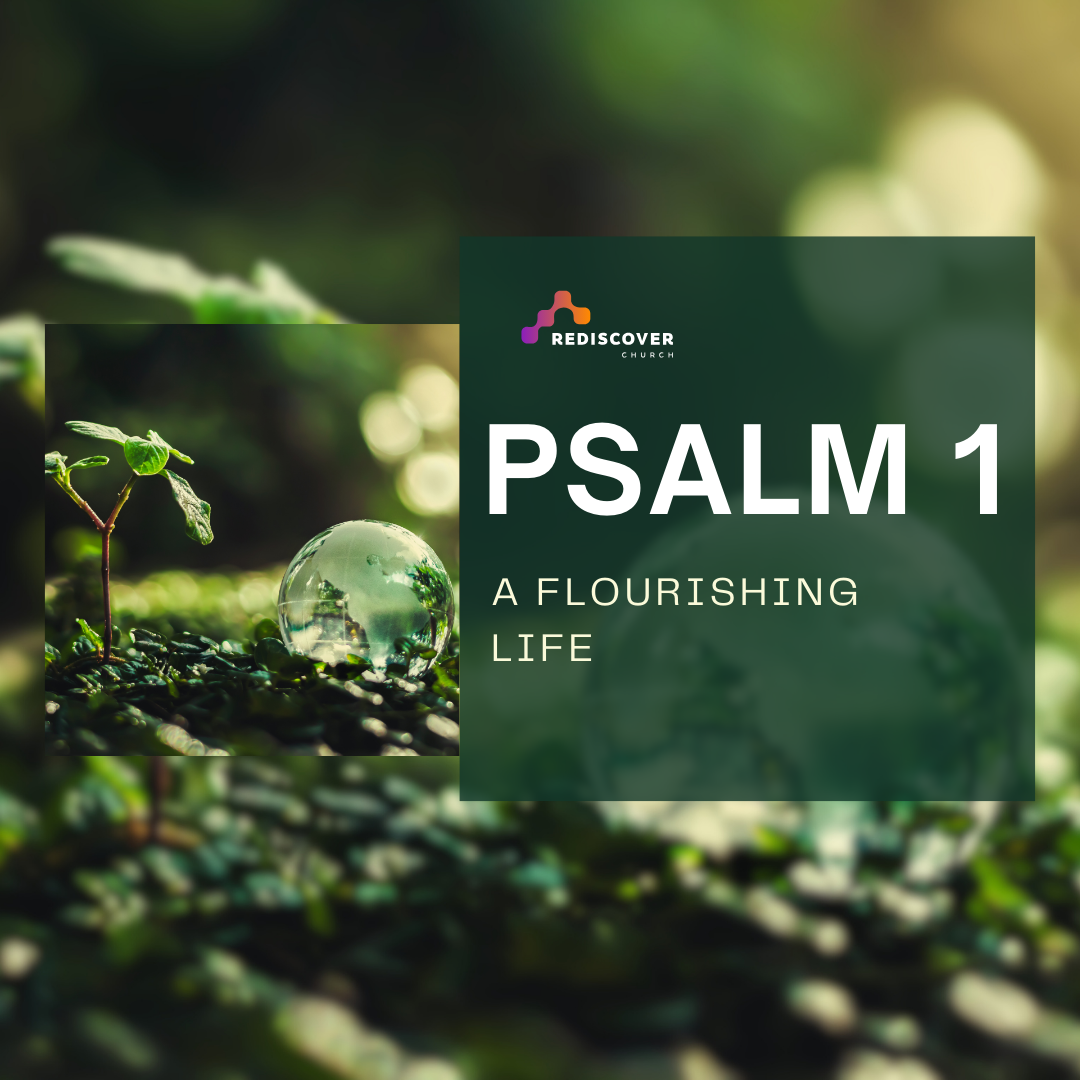
Well, that's definitely the older side of things there. So those of you who are parents maybe had an extra hour with your children this evening, this morning as a real blessing. But well done on getting here at the right time and on the right place. And what a beautiful day, isn't it? What a fantastic day to be worshipping God together, as Matt says. My name's Graham and it's a great pleasure this morning to have this opportunity to continue our worship by opening up the Word of God together. So are we ready for that this morning? Are we excited about opening up the Word of God? Yes, we are. So if you've got a Bible with you, if you'd like to open it up or turn it on and fire it up, and we're going to have a look at Psalm 1 together this morning. Last week, didn't we have a fantastic service with the young adults and Ellie and the team talking to us about what it means to thrive authentically? And so this morning I'm hoping not to repeat what was said last week, but just maybe to carry on thinking around that theme about what is a flourishing life, what does that look like? And what can we learn from Psalm 1? Now, the thing about the Psalms is they're designed to be declared corporately.
They are designed to be sung. Have you ever wondered what the Psalms sounded like as a song? I don't know, Matt, if you ever kind of pick up a psalm and think, I wonder what this sounded like, you've written one fantastic, which is a really good thing to do. You'll be pleased to know, in case you're getting worried, we are not going to try and sing together. And even better, I'm not going to try and sing it to you, but if you are comfortable doing so, and please don't feel under any pressure to do so, the words of Psalm 1 and the NIV are going to come up on the screen. And I thought with some of us, at least we could read it together aloud, because part of our worship is declaring the word of the Lord together. So if we can have the start of Psalm 1, this is the NIV, so if you're happy to read it with me. If not, just feel free to listen along.
Blessed is the man who does not walk in the counsel of the wicked, or stand in the way of sinners, or sit in the seat of mockers.
But his delight is in the law of the Lord, and on his law he meditates day and night.
He is like a tree planted by streams of water, which yields its superfruit in season, and whose leaf does not wither. Whatever he does prospers not so the wicked, they are like chaff that the wind blows away.
Therefore the wicked will not stand in the judgment, nor sinners in the assembly of the righteous.
For the Lord watches over the way of the righteous, but the way of the wicked will perish. Let's pray together. Heavenly Father, we thank you that we can continue to worship by opening up your word together.
We thank you, Father, for the gifts that you give us. We thank you for the gift of Jesus, who is alive and reigning today. We thank you for the gift of the Holy Spirit, who will take these words and seed them into our hearts and help us to understand them and to apply them in our lives.
We thank you for these words themselves. And we just position ourselves now, Father, just like the tree is positioned by the water, we position ourselves to be fed by you. Holy Spirit, take these words this morning. Help them come alive to us. Help them to draw us into your presence. In Jesus name we pray. Amen.
Amen. What a fantastic psalm this is. And it begins by just talking about what a distinctive life is. A distinctive life. It begins with the first word, blessed or happy or joy. That's a really great word to be starting off with this morning, isn't it? Some people think this psalm is talking to one individual and we'll come back to that a little bit later on. Some people think it's talking to a group of people, but either way it's about talking to somebody who is an expression from an outsider looking on to a group of people or a person and saying that's the kind of life I want. That's an enviable, desirable kind of life.
When we think of the ten Commandments and the teachings of Jesus, we think of the Proverbs, we think of the letters to the churches. They're not primarily a self help guide to help us be successful. They are God's way of teaching his people to be distinctive in the culture that surrounds them. Would you like to be distinctive in a positive Christ like way in the culture that you surrounding him?
Very positive. Very good. Excellent. I'm glad to hear it. And this is an observer saying what a fantastic life that is. I was trying to think of an example and do you remember last week, if you were here last week, Tilly was talking about the impact that Deo Gloria is having. And you pop your hands up. If you've been to Dea Gloria, fantastic. If you're not sure what Day of Gloria is, it's a coffee shop that's owned by the church and is on the high street of Newton Abbot. And you go into. And I don't know about you, you go into Degloria and you go, oh, what a lovely atmosphere. What a fantastic place this is. What a wonderful culture. It's a distinct, distinctive culture, isn't it? And that's exactly what this word here, blessed, means. It's someone who looks at the community of faith and goes, oh, what a fantastic culture that is. What a fantastic life that is. I want to be part of that. And it's an idea we find throughout Scripture in Deuteronomy, chapter 4, where Moses has brought the people out of slavery in Egypt, and he's giving them about to give them the commands and the ten Commandments and so on, encouraging them to obey what God has said. He turns to them and he says this.
When they, that is the surrounding nations, when they hear all these decrees, they will exclaim, how wise and prudent are the people of this great nation. So Moses is saying to the people, if you follow what God's asking you to do, other people will look at them and go, that's a great nation. I want to be like that nation. Jesus said a similar thing in John, chapter 13, verse 35. Your love for one another will prove to the world that you are my disciples.
We want a culture that other people look to and go, yes, what a wonderful thing it is to be part of that faith. And if we look in the Psalms and some of the Old Testament where we see this word blessed or joy or happy, where we see it in other translations, in other forms, we build up a picture of what that kind of culture looks like. So let me just give you a few of them and see if you can resonate with them. See if you think to yourself, yes, I want to be part of a community like that. And my prayer is that our community of rediscover Newton Abbott will also be like that. So here we go. Would we like to be a people who trust in and. And are strengthened by the Lord?
Yes, we would. That's one of the meanings of the word blessed. Someone who trusts and is strengthened by God. That's what we want to be. Are we a people who recognize that they are forgiven and they celebrate the mercy of God? Yes, we are. And those songs we've just sung all about celebrating the goodness and the mercy and the forgiveness of God. The next one's a bit tricky, I warn you. I'm not so keen on the next one. The next one is blessed are people who have a patient and positive attitude to God's correction and discipline.
I won't do a straw poll on that. Who likes to be corrected? Who likes to be disciplined? I'm not one of them. It's not one of my favorite things. But that's what the Lord does to people he loves. He corrects us and guides us and points out the errors of our ways sometimes and helps us move on.
We're a people who want to deal justly with others, do what is right and help the poor. That's part of what being blessed means. Are we up for that?
Yes. Amen. Fantastic. And are people who find wisdom and understanding for life through their relationship with the Lord? Absolutely.
That's the kind of life that the psalmist is looking at and saying, that is blessed.
That is enviable in a positive way. So our first prayer this morning may be, lord, would you make us like this as a community? Would you make us distinctive in Newton Abbot? Would you make us distinctive in our roads? Would you make us distinctive in our schools and our workplaces? Will you make us distinctive when we are out and about with other people? May we be known as people who are blessed in the sense that others will look at us and say, that's a great sort of life. Amen. Amen.
However, the psalm, unfortunately then goes on to give us some warnings rather than going straight into the more positive stuff about trees and flowers and all of those nice things. It actually says, there's a way that I don't want you to follow. There's a path that you shouldn't go down. There's a big no entry sign.
And it's so important that the psalmist says it three times. He says, do not walk in the counsel of the wicked. Do not stand in the way of sinners, do not sit in the seat of mockers. So we do, I'm afraid, need to spend a little bit of time in these verses. Who is he talking about? What is he talking about? What's the consequence of going down this path? So hold on to your seats because it's not good news, unfortunately.
But I think what it's talking about here is an attitude rather than pointing its finger at individual people and saying, well, you're wicked, you're a sinner, you're a mocker. It's Talking more about an attitude. And I guess it's the opposite of everything we've just talked about under the heading of blessed. It's an attitude of people who have no fear or reverence of God. It's an attitude of those who appear pious and. And pretend to obey. It's an attitude that oppresses the poor. It's an attitude of lying and hypocrisy. It's pride and arrogance, effectively people who do not want to live God's way. That's what is meant by the terms that we've got here. They're the same sort of people. You may be thinking that sounds a bit like the people Jesus used to go on about.
Not the poor and the outside and the outcast who he also called sinners. But he didn't mean that by that. He didn't mean the same kind of sinner that we've got here. He talked about the religious leaders. He talked about those who pretended to be pious and who weren't. He talked about those who'd hardened their hearts and who were hypocrites. Jesus had very strong words to say about that kind of attitude. So this psalm isn't saying we shouldn't spend time with non Christians. It's saying that we should avoid attitudes and worldviews that stand in mockery of what God stands for.
We are warned against a hardened defiance, an arrogant and unscrupulous view. Proverbs 1, verse 22 has three types of people. Three types. Sorry, three types of people. For the benefit of the tape, I got my fingers wrong. Three types of people. Simpletons, fools and mockers.
Simpletons are people who get it wrong, go off in the wrong direction, but are willing to be corrected. I'd like to be a simpleton. I'm happy to be a simpleton. I'd like to be a simple man. Then there's the fool. And the fool is someone who hears the word of God and resists it.
Not so good. And then the mocker is the person who hears the voice of God, resists the voice of God and then ridicules the voice of God. And that's the most serious in the Bible. That's the most serious, serious form of standing against God that you can have. Please, God, don't make me a mocker. So the warning here is, don't have anything to do with that kind of a worldview or with that kind of an attitude.
But there's also. Did you notice, there's a progression in it. It goes from walking to standing to Sitting.
Let's think about that for a moment. Walking to standing to sitting. You can walk by something, you can clock it, but you don't stop. It enters into your mind, maybe, but you don't do anything about it.
But the temptation with that is, next time something comes along, you stand and you linger and you give it more attention.
And then maybe you sit and you rest with something and you sit with it, and maybe you even promote it yourself. That's the danger of incrementally moving towards a worldview that mocks God. Let me. I was trying to think of an example of this to share with you. So at the risk of making your opinion of me sink very quickly, let me tell you this story. It did happen a long time ago. It happened when I was at university, so at least five years ago.
And I was sharing a house with two other people.
One was not a Christian, one was a Christian.
And at that time I was quite a new Christian.
I'd grown up in a church, but I hadn't long made a commitment to God.
And part of my worldview at that time, part of the way I saw the world, was that I thought that horoscopes were a bit of fun.
I thought they were generally. I didn't believe them, but I thought they were generally okay.
So in our analogy here, that was me walking with a worldview. I didn't do anything about it, but I walked with this worldview. I accepted it.
But it wasn't long before then I started reading the horoscopes when they were in the newspapers in our house. And I would always justify, say, I don't believe that rubbish, don't believe that. But I would read them. And that's like standing with something.
And then just in case your opinion of me can't go any lower, I started buying magazines. There was a part work that came out at that time on astrology and things like that. And I used to buy this part work. And I was quite proud of it, thinking, well, you know, I'm tough enough. I'm a tough Christian. I can buy this, I can handle it. So I would buy them and I put them on a shelf in our living room in this shared house. And so literally, when I sat down in this living room, I was literally sitting with these magazines.
And at the time, we'd had a very harmonious house. It was a lovely house. We got on really, really well. And round about that time, funnily enough, things started to go wrong. The atmosphere in our house darkened, relationships started to fracture. There were A lot more arguments. We were not less comfortable with one another. And one evening I was sitting there, the others had gone to bed and I was sitting there, it was fairly dark, and I was thinking, lord, why is this happening? Why are we all suddenly arguing and all of those things? And there are very few times in my life when I can say I really sense God communicating with me absolutely personally and directly in the moment. But this was one of them. And as I was sitting there, I had this sense of God saying, graham, you've got to get rid of those magazines. They have no place in your life. They have no place in this house, they have no place in the community of God. Get rid of them. So I got up, I picked them up, went outside, threw them in the bin and then came back inside. And the next day I told my housemates what I'd done and why I'd done it, and they were fine with that. And from that moment, things got better.
From that moment, I've not been tempted or wanted to have anything to do with that particular worldview. And I'm really grateful to God for speaking to me so clearly and directly. Don't walk, stand or sit with things that mar that distinctiveness that God has called you to be.
There is a happy ending to that story, by the way. The first happy ending is that by the end of that academic year, the person who wasn't a Christian was a Christian. So that was really, really good. And then the second one, which is almost as good, was the other person in that house was Liz. And we end up getting married.
And so good news all round.
So it's warning us, do not walk, stand or sit with these attitudes that are dangerous. You won't become the people God wants you to be. You won't have a flourishing life if you do that. And it says, you'll be like chaff if you do this, it'll be like chaff. Now, chaff is the waste. When you sort wheat, when you take and you throw it in the air, there's a picture of that somewhere.
You throw the grain in the air, the grain falls down because it's weighty. The chaff is the bit that just flows away in the wind. It blows away in the wind. It is of no value and of no weight. The one who sets their hearts against God is one who has no weight or consequence and is ultimately blown away. And just before we leave these verses, you'll notice it talks about judgment, it talks about the consequence of that kind of a lifestyle. And we can't ignore that. But the meaning of judgment can be multifaceted. It can mean the trials of life. It says, when the trials of life come, will you be able to stand firm? You may be thinking of Jesus story about the house on the rock and the house on the sand. And he says, if you build your house on the rock, you will stand firm. If you build your house on the rock and sand, it will fall. If you obey the teachings of Jesus, you will stand firm, and so on. So that's a kind of a judgment, isn't it? How you cope when trials of life come along, are you able to stand firm? It could refer to being within or without of a community, being part of the community of faith, or being away from the community of faith. Being at home, if you like, or not being at home. The Bible talks a lot about the idea of exile as a consequence of not following the way of God. And notice these words in Jeremiah 13:33, God says through Jeremiah to the people of God, if you do not obey me, I will scatter you like chaff that is blown away by the desert winds. So same image there. It's an image of exile and of being moved out of God's presence. Or of course, it could mean God's final judgment. It could mean that day when he makes that final decision about who they're going to spend eternity with him and who is not. We know the character of God is just, don't we?
Just checking you're still there. We know that the character of God is just. We know that the character of God is righteous. We know that he will put things right that are wrong. That is what a judge does in the Bible. He puts things right that are wrong. He transforms injustice into justice. He relieves the suffering of those who are suffering. And he takes away, he removes everything that will get in the way of his perfect plan. That is what a judge does.
And we can be trusting that he will do that. And if we're going to be a distinctive community who want to reflect the character of God and nature of God back into the world, we have to take these things seriously. We have to take these worldviews that are mocking God. We have to take them seriously and make sure we don't have anything to do with them. If we want to look and sound like Jesus, that's what we need to do. Otherwise, at worst, we're opening ourselves up to offering nothing of worth to our surrounding culture. And at worst, the displeasure and judgment of God.
So that's the gloomy bit over with. Is that all right. Are you still there? Shall we move on to the more positive stuff? Yes, please.
Yes, please. Let's have the positive. There is a better way. There is a better way. In verses three and four, we have. Sorry, two and three, we have this image of the tree. Now, wisdom literature in the Bible, throughout, so books of Proverbs and some of the Psalms and so on, they have a way of describing life. They describe an ideal life with God. They say, don't go down the path of folly. Go down the way of wisdom, and you will have a good life. And so on. So listen to Jeremiah 17:8. This is wisdom literature. See if you can spot the difference between what it says here and what we've got in Psalm 1. Jeremiah 17:8 says, Blessed are those who trust in the Lord and have made the Lord their hope and confidence. They are like trees planted along a riverbank with roots that reach deep into the water. Their leaves stay green and they never stop producing fruit.
So you've got trees, riverbank, roots, water, leaves, fruit.
Same as Psalm 1. But also in Psalm 1, you've got this verse that says, the one who meditates on the law.
It tells you how to do it. Not just that it's a good thing to do, it tells you how to live this flourishing life.
It talks about meditating on God's law. Now, the word here in the law is Torah, which is when we understand, when we think about that, we sometimes think it's the first five books of the Bible that Moses wrote with the laws and so on, and that's what would have been understood at the time this was written. But John Eaton in his book on the Psalms, winds it out for us. And I love this definition of Torah. I'd love to spend time meditating on this. Here we go. It's the teaching and full revelation of God.
It's the importance of His Word and His will.
It's his guidance and his grace, and at the deepest level, his very self.
That is what we can meditate on. What a fantastic set of riches that would be. Teaching revelation, word, will, guidance, grace, his very self.
Just spend time thinking about the full revelation of God, Father, Son and Holy Spirit, and that will help us lead a flourishing life.
But it won't surprise you to hear that the word meditate also has a number of facets and a number of meanings. So is it okay if we just look at five of them?
Is that okay?
Well, I'm going to anyway because I've got the microphone, so I'm going to do it. Anyway, but just checking, we're okay. So if you're making notes, there are five coming up in the translations of the Bible that we have. It very often translates the Hebrew word with different words. It doesn't always use the word meditate, but in Hebrew it's the same word, it's the same idea. So here are five ways in which the word for meditate, the word that we get, the Hebrew word meditate, is translated within the Old Testament. First of all, Joshua 1:8, study this word of instruction. Continually meditate on it day and night so that you will be sure to obey everything in it. So first of all, meditating is about study. It's about taking time to, to think about what the scriptures actually mean. Reading scripture is essential. Reading scripture is fantastic. But there's also this encouragement to us to study it, to think about it, to delve into it, and that will look different. I can't tell you what that looks like for you. You will have your own life, you will have your own pressures, your own learning styles, your own seasons. And so it's not for me to say you have to do it this way or that way, but I would encourage you to find ways of studying it on your own or with somebody else just to understand the scripture a little bit more so that you can worship, so that you can tell God how wonderful he is. And at this point I will give a little shameless plug. Am I allowed to do that for the winter Bible school which is coming up in a few weeks time, where we will be looking at the summer, more of the psalms together and just taking that opportunity on a Sunday evening once a month for four months to study the word of the Lord together. Please do sign up to it on the newsletter.
You can come if you don't sign up, of course you can. It just means that we know how many are coming. And it also means we can send you out other resources as an email list afterwards if you would like them. So there's a shameless plug over and done with. So study the word of the lord. Secondly, Psalm 77, verse 12, they and what it means by that is wonderful deeds are constantly in my thoughts. I cannot stop thinking about your mighty works. So meditating on the law is also about thinking about what God has done. It's remembering what God has done, journaling, keeping a diary, all those sorts of things. Writing it down is a really good way of remembering what God has done. So in those seasons where you feel a bit dramatic, you can go back and say, ah, yes, I remember What God has done. It's a really good thing to do.
One of the most inspiring parts of my week, which I absolutely love, is when our life group gets together and we share stories about how God is at work and what God is doing and what God has done in the past. I never fail to be inspired and uplifted by the stories of these wonderful people in our life group. Remember what God has done.
Thirdly, Psalm 35:28, then I will proclaim your justice, and I will praise you all day long. Very often when we think of the word meditate, we probably think of something that's quiet, reflective, internal, and on our own.
But meditate can also have an outward audible, proclamatory aspect to it as well. When we speak out the words of God, like we did when we read the psalm together, that's a way of meditating on the word of the Lord. When we stand up for justice, when we declare to people that's not right, we are meditating on the way to the Lord. So proclamation is a really important part of meditating. If you are someone who's good at standing up for justice and putting forth arguments for truth to other people, you are meditating on the word of the Lord, and you should continue to do so and teach those of us who aren't very good at it.
Psalm 37, verse 30 says this. The godly offer good counsel. They teach right from wrong.
When we have to make a decision, when we have a choice about how to behave, should I do this or should I do that? If we make that decision in accordance with Scripture, with godly advice from other people, that's meditating on the word of the Lord. If we think we might be wanting to do something, and we know that the Scriptures say, don't do that then, and we do it then, we're moving ourselves away from that place of flourishing. So become aware of what Scripture says about certain things. Talk to other people who are more experienced if you've got a decision to make, and make your decision in the light of scriptural teaching. And finally, fifthly, Psalm 38, verse 12 says this. My enemies all day long they plan their treachery. Now, that might not sound a very positive verse in the context of meditating, but the word plan there is the word meditate. In Psalm 2, if you've got your Bible still open in Psalm 2, it begins with, why do the nations conspire and the people's plot in vain? Plot is the same word meditate. So in Psalm 1, you've got a good Way to meditate. And in Psalm 2, you've got a bad way to meditate. So planning with God, objectives with God at the center is a good way of meditating. Planning, like making plans that ignore God is not a good thing to do. So if you've got a decision. So when we're thinking about how we grow as a church and the sorts of things that we want to be doing into our third year, we want to put God at the center. What is God wanting us to do? How does he want us to grow and flourish in this place? That's how you make your plans.
So those are the five things. And you may want to just take a moment as we're heading towards the end. We're not at the end. It's not my finally, finally point yet, but we are heading towards the end. Think about that to yourself. How am I getting on with my meditating? How do I meditate on the way of the Lord? How do I study? How do I remember the Lord? How do I proclaim what he's done? How do I take advice? How do I plan for my life? And am I doing those things in the light of Scripture and in the light and the power of the Holy Spirit? And if I can do those things, if I can meditate in that way, if I can begin to make those my habits, it tells me I'll be like a tree planted by the riverbank, bearing fruit in each season, not withering and prospering in all that I do. Makes me remember the tree of life in Genesis. It makes me remember the trees of life in revelation from beginning to end. God wants his people to flourish and be distinctive and to be in his image.
I don't know if you knew this, but in the near east, when this psalm would have been written, the trees that it's talking about and the streams of water, it wouldn't have been taught, wouldn't necessarily be like the pictures that have been coming up on the screen. When I think of a tree by a river, I think of a nice Dartmoor river with a tree that's been there for thousands of years. And it probably blew there by mistake or by Aunt's accident. And it's taken root and it's grown, and that's inspiring in itself. But that's not what this kind of a tree is. The tree in the near east, first of all, would have been a transplanted tree. It would have been taken as a sapling, I assume. And they would have looked and said, where can we best place this tree to make sure that it flourishes. And they would place the tree in a place not that would be immune from the weather and the storms and things like that, but safer.
And so this tree would be planted, transplanted. We are adopted, aren't we? Adopted into God's family, transplanted into a place of safety.
And then the streams of river. The streams of water that it talks about is actually an irrigation canal. It's something that's been deliberately designed and built in order to bring water to the roots of the tree, irrespective of whether there's a drought going on nearby or an overflow or those sorts of things. It would have been designed to bring its water to it.
So it's not about a chance tree that just happens to be in the right place, that just happens to get enough water in order to grow. It's a tree that has been specifically placed in a place where it is designed to thrive and the water has been deliberately designed to feed it. You and I have been deliberately placed by God to thrive and grow. And he will provide everything we need in order to do that. We're not by chance. We're not Christians by chance. We're not here this morning by chance. We're here because God loves us and because he wants us to grow and thrive. And he will provide scripture, people, prayer, all sorts of things in order to help us thrive and grow. That's exciting, isn't it? You're not here by chance.
The tree. What's a successful tree?
It's a tree that does what a tree is supposed to do. It has leaves, it has fruit, and so on. We think of success as money and prosperity and. And things and power and so on and so forth. A tree doesn't have any of those things. A tree just does what a tree is designed to do. God wants you to reflect Jesus into the world. That's what you're designed to do. You're designed. I'm designed to reflect God back into the world. That's what I'm for.
That's what a flourishing life will look like. The more that I do that, the more I will be flourishing.
Is that okay?
Okay. There's one more thing.
There's one more thing.
And as I was getting ready for this, I came across this. It's almost. It's not an alternative reading of this psalm, but it's an extension of it. And I'm going to share it with you because it spoke to me. And having listened to the songs that Matt and the team have given us, to worship, to this morning. It fits in really well with the whole overall theme of how we were worshipping. So I'm going to share this just for a few more minutes and then I'm going to play a song and invite us to. No, I'm not going to sing a song. I'm going to play a song on the screen as an opportunity for us to just reflect and pray and ask the Holy Spirit, what are you saying to me today? What are you saying to me today? And then Matt and the team will come back and lead us in one final song where we can collectively declare the goodness of God together.
Christopher Asch, in his book on the psalm, says there's a danger of reading the psalm entirely in the way that maybe I've presented it. And that is in what he calls a moralistic way. He says, there's a danger of you look at the sinners, the mockers and the wicked over here and you go, don't want to be like you. And then you look at the tree and the meditating of the law over here and go, yes, I want to be like this. So I'm going to do less of this and I'm going to do more of this. And inadvertently you end up in a kind of a faith by works kind of thing. I'm going to try not to do this and I'm going to do this. And it becomes a bit of a willpower battle.
And that's not how he suggests we should read it. Let me give you a brief outline of how he reads it. He says this from a Christian perspective, verse one. And if you've got the Bible with you, just have a look at verse one again.
Blessed is the one who does not walk in the way of the wicked.
What he would say is that with the exception of one person in the history of the world, every single person falls into that category.
You, me, anybody we know, certainly before they were a Christian, would fall into that category. We are all people who, whether we like it or not, have adopted a worldview without God. We have all said, I'm going to do things my own way. We have all tried to live life on our own terms. We have all effectively walked, sat with mockers. That is what we have done. That is our natural state. You know the song, don't you? I'll do it my way.
We have propensity to put other things in the place of God. We will elevate, we will lift up things, money, relationships, power. We will lift all sorts of things up and give them more importance than we will give God. And the Bible is consistent in telling us that if we do that we will be judged. You know, we will be like chaff, we will be blown away.
Similarly, verse three, blessed is verse one, blessed is the man and verse three, his delight is in the law of the Lord.
There's only one person in the history of the world who has ever been able to do that from the get go, and that is Jesus. He is the only one who is able to meditate on the law day and night. I can't do that.
He is the only one who will be able to proclaim God's justice fully and completely without hypocrisy. I can't do that. He is the only one who will be able to give the measure of God's purposes. He is the only one who could have stood in the face of God's judgment because he never sinned and he was always perfect. I could never do that. So verse three, so verse one becomes me, verse three and two becomes Jesus.
And those of us who are Christians, and I don't know everybody here, it's really lovely to see people I don't recognize here. I don't know if you're a Christian, I don't know if you're not a Christian. So forgive me if I talk in sort of general terms. But from a Christian point of view, a Christian at some point or at the beginning of their Christian life has come to the conclusion that I let me talking about myself, that I am someone who's tried to do things in my own way. I have tried to put things in place of God instead of God. And therefore I am subject to judgment. I am subject to his judgment upon my life. But I am so grateful that Jesus Christ, this one perfect man who can do all of these things, has come and taken that judgment in my place. He has suffered for me. He has taken the punishment even though he didn't deserve it. He has taken that punishment for me. And therefore the verdict of guilty on me has been transferred into a guilty into a not guilty. Did I say that right?
His guilty verdict on me has been transferred to not guilty because of what Jesus has done on the cross. And therefore I accept Jesus. I am so thankful. I'm sorry that I've gone my own way. I'm sorry that I've tried to do things my own way. I'm sorry I've put you in second place over and above, beyond, below something else. I'm so grateful that you died on the cross and you have taken the judgment in my place and now in response to that love and response to that forgiveness, in response of opening the way to a relationship with God that I now have because I've accepted Jesus, now I can turn to the Holy Spirit and say, holy Spirit, because Jesus is alive, because I can see and learn and walk and talk and be with him. I want to be like the man in verse one. I want to meditate on the Lord day and night. I want to proclaim, remember, study, declare, take counsel. I want to. I can't do it in my own strength, but with your Holy Spirit, I can be more like Jesus who did. So. Would you come and be with me, Jesus? Will you come and be with me through the power of your Holy Spirit, to show me how to meditate, to show me how to remember, to show me how to study, to show me how to proclaim, to show me how to accept advice, to show me how to make plans. And I want you to feed me and bring that water to the roots of my tree so that I can learn what it means to live a flourishing life. That's my prayer. I guess.
I wonder if it's your prayer this morning.
Let's take a moment to listen to a song. Anyone know Graham Kendrick? We don't sing Graham Kendrick very often, do we? So we're not going to sing Graham Kendrick. We are going to listen to Graham Kendrick singing. He wrote a psalm. He wrote a song based on Psalm 1, and we'll just listen to it together. You may want to close your eyes. The words will come up on the screen. I hope you can listen to it if you like it and you want to sing along as the chorus goes on. It's effectively very easy chorus to sing. You can do that. But before we do, I'm just going to pray and we're just going to ask Holy Spirit, I've said lots of words this morning about what it means to have a flourishing life, but the most important words are the ones that you speak directly into our hearts.
And I just ask and invite every one of us here now just to pray a simple prayer for these next three or four minutes. And that is, Holy Spirit, reveal to me what you want to say to me today.
Reveal to me what you want to say to me today and help me meditate in these few minutes on your goodness, your mercy, your forgiveness, your trustworthiness, your love, your compassion, your justice.
And help me to meditate on how I was so far away from you and yet you took the punishment for that and you drew me back to yourself and that you want to nourish me and help me to flourish.
I give you these few moments now. I give you my heart in Jesus name. Amen.
So let's just listen to this song and take a moment to reflect.
[00:41:40] Speaker B: I will reach forever on high Here by the stream by which travel deep this river will never run dry Every season I will stand and the winter spread out Summer when the storm winds bend me down I will lift my head I know my anchor holds like a tree by the morning I will reach forever from your breath Though we so with tears will re shouts of joy Like a tre I will reach forever this river will never run dry Ide Lord wicked Will not stand will not stand Like a dream by the water I will reach forever long high here by the stream My roots travel deep this river will never run dry Like a dream by the I will reach fore heaven on high he must dream my sh this will never run dry Will never run dry.
[00:45:22] Speaker A: Matt and the Team I'd just like to read the psalm once more, if that's okay. And then we're going to sing Living Hope.
And I'd really encourage us, particularly if you're a Christian this morning, to declare this song as a statement of the truth of the scriptures that we're reading. This is a living hope, a God who has rescued us from darkness and brought us a living hope.
And if the Lord has spoken to you during the course of that song or during the course of our service this morning, and there's something you feel that you'd like to respond, respond in. Feel free to ask somebody you trust and know to pray with you during the course of the song. You don't have to sing. You can just sit and pray. You can come to the front here, and people will gladly pray for you. If you're not a Christian and you'd like to know more about becoming a Christian, what it is to put your faith in Jesus, then do come and talk to us. Or you may want to know enough and say, yeah, I want to put my faith in Jesus this morning. And that's very simple. You just turn to him and say, I put my faith in you this morning, Jesus, I'm sorry for everything I've done wrong, everything I put in front of you. And I now turn to you. So just before we sing this song, let me read Psalm 1 to you again. But I'm just, with your permission, just to let you know, I'm going to change it somewhat and read it in the light of that analysis I gave at the end there. So I'm going to talk about Jesus and us. So let me read Psalm 1, and then we'll sing.
Blessed is Jesus who is not like me, and does not walk in the way of the counsel of the wicked, or stand in the way of sinners, or seat or sit in the seat of mockers. But Jesus's delight is in the law of the Lord. On his law, Jesus meditates day and night. Jesus is like the tree planted by streams of water. He yields fruit in every season. His leaves do not wither. Whatever Jesus does prospers.
Not so me or not so me. Before I met Jesus, at the very least, I was like chaff that the wind blows away, and I would not stand in the judgment. I would not be part of the assembly of the righteous.
But the Lord watches over Jesus.
The way without Jesus will perish.